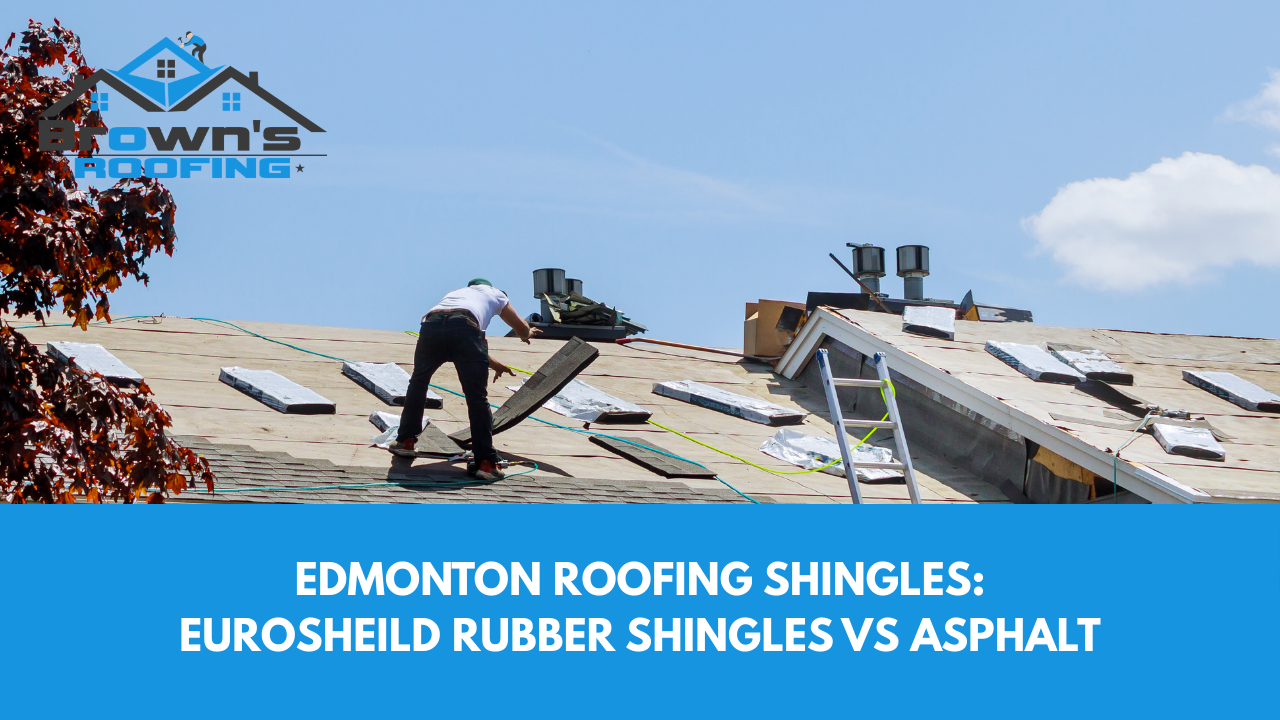
Edmonton Roofing Shingles: Eurosheild Rubber Shingles VS Asphalt
Hi everyone, I’m Lyall, an Edmonton Roofer with Brown’s Roofing. Today, I’ll be sharing some differences between asphalt shingles and rubber shingles. Let’s get straight to it!
Wind Resistance
Asphalt Shingles
Most asphalt shingles are rated for wind resistance of up to 210 km/h, particularly the higher wind-rated shingles. Some asphalt shingles have a much lower wind resistance of around 100 km/h. Manufacturers determine this rating by testing shingles at continuous wind speeds of 210 km/h for up to two hours straight. When installed correctly, asphalt shingles can withstand high winds.
Rubber Shingles
For rubber shingles, I’ll focus on Euroshield, which is, in my opinion, one of the better options for rubber roofing. Euroshield shingles are rated for wind resistance of 170 mph (approximately 270 km/h) and are tested at continuous wind speeds for two hours, similar to asphalt shingles.
Installation and Wind Resistance
Both products provide a high wind rating, but proper installation plays a key role. Asphalt shingles depend on correct fastening and tar bonding, while Euroshield shingles use tongue-and-groove technology combined with nails.
From my experience, it’s hard to overdrive nails with Euroshield shingles, unlike asphalt shingles, where less experienced or low-quality roofers can easily overdrive nails. This is particularly common during hotter or colder temperatures, which puts asphalt shingles at higher risk of being blown off. Rubber shingles don’t have this issue, regardless of temperature.
Aesthetics and Curb Appeal
Asphalt Shingles
There are three main types of asphalt shingles:
- Three-Tab Shingles: An older option with a flatter look and lower curb appeal.
- Architectural Shingles: Offer better curb appeal and come in a wide variety of colors.
- Premium/Designer Shingles: Provide the highest curb appeal but have fewer color options compared to architectural shingles.
Rubber Shingles
Rubber shingles, in my opinion, offer some of the highest curb appeal on the market today. They are available in two styles: slate and shake. You can also choose thicker profiles, with options for 9-inch or 10-inch exposures.
Rubber shingles have about four color options, which is fewer than asphalt shingles, but their premium look often outweighs this limitation. Both asphalt and rubber shingles can provide excellent curb appeal, depending on what you’re looking for.
Warranty
Asphalt Shingles
Most asphalt shingles come with a warranty period of 40 to 50 years. However, these warranties are often prorated after 15 to 25 years, covering only materials. For example, a warranty might start at 80% coverage and then decrease annually.
Rubber Shingles
Rubber shingles offer a 50-year non-prorated warranty. After 50 years, the warranty still covers 25% of the original material cost. Rubber warranties are straightforward and easy to understand, making them a more transparent option for homeowners concerned about warranty coverage.
Installation
Rubber shingles are designed to install similarly to architectural asphalt shingles, making them manageable for skilled roofers. However, rubber shingles are harder to cut, have a tongue-and-groove system, and require a specific installation pattern. These factors can make the installation process more time-consuming.
Asphalt shingles, on the other hand, are easier to cut and install, allowing for a faster workflow. Roofers can establish a steady rhythm when working with asphalt shingles, making them quicker to install overall.
Cost
For most roofs, rubber shingles cost about double that of asphalt shingles.
- Asphalt Shingles: Start at around $4.50 per square foot for mid-range or premium shingles.
- Rubber Shingles: Start at $10 per square foot, with prices varying based on location.
In some areas, rubber shingles can start as high as $16 per square foot, while asphalt shingles may start at $6.50 per square foot. If you’re looking to save money, asphalt might be the better option, though rubber shingles offer a more long-term solution.
Lifespan
- Asphalt Shingles: Typically last 25 to 35 years, depending on factors such as shingle type, roof slope, and climate.
- Rubber Shingles: Are likely to last 50+ years, as rubber is highly durable, much like a tire.
Environmental Friendliness
Rubber shingles are made with 95% recycled materials, primarily tires, making them a highly eco-friendly choice. In contrast, asphalt shingles often end up in landfills, making rubber the better option for those looking for a sustainable product.
Fire and Impact Ratings
Fire Resistance
- Asphalt Shingles: Class A fire resistance, offering a high level of protection.
- Rubber Shingles: Class C fire resistance, which is significantly lower but still provides some protection.
Impact Resistance
- Asphalt Shingles: Range from Class 1 (tested to withstand 1.25-inch steel balls) to Class 4 (tested for 2-inch steel balls).
- Rubber Shingles: Always Class 4, with some options capable of withstanding hail of any size.
If you live in a hail-prone area, rubber shingles may be a better choice. While asphalt shingles have premium options for hail resistance, rubber shingles are generally more durable.
Conclusion
That’s it for now, folks! I hope this video helped explain some of the key differences between asphalt and rubber shingles. Most importantly, I hope this information helps you make an informed decision for your new roof or roof replacement.
If you’re in the Edmonton area and need a quote for asphalt or rubber shingles, give us a call! My Edmonton roofer team at Browns Roofing and I would be happy to provide a free estimate and answer any questions you may have.
Thanks, and have a great day!